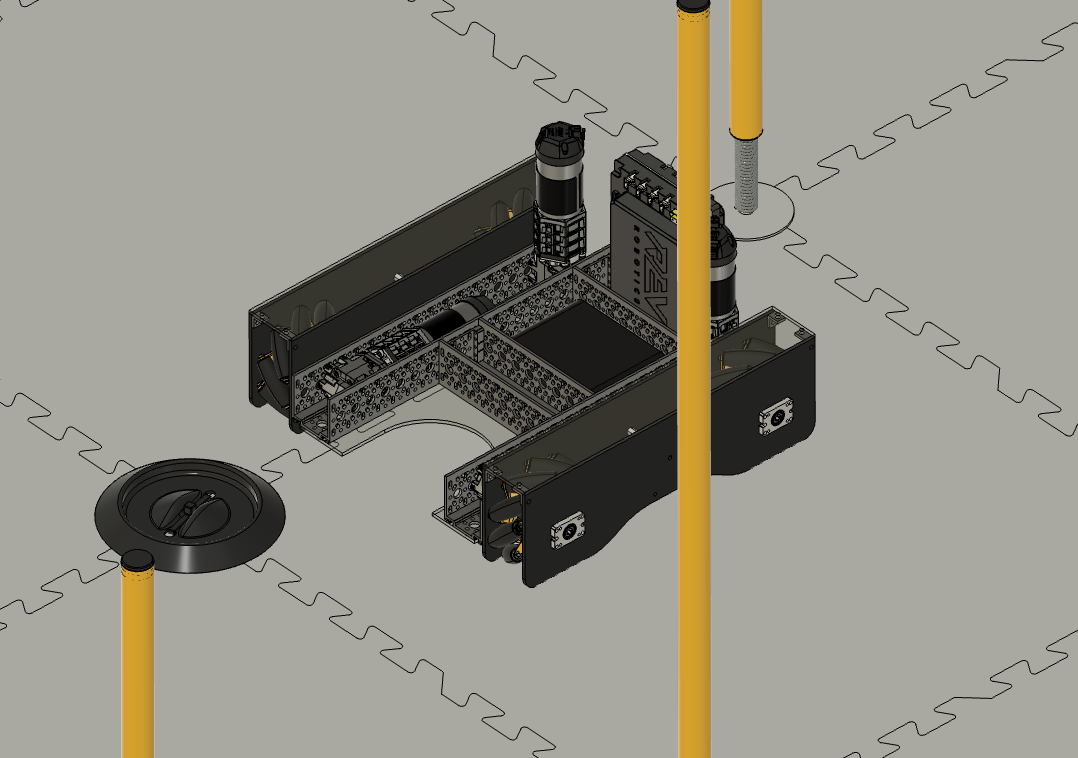
The Problem:
Our robot needed a drive chassis that could move quickly and omnidirectionally around a tight competition arena while supporting a tall extension arm, meaning the chassis had to be compact enough for a short wheelbase, yet have a low enough center of gravity despite that added height. All of this had to fit within a strict footprint requirement dictated by the narrow spacing of arena obstacles.
Design:
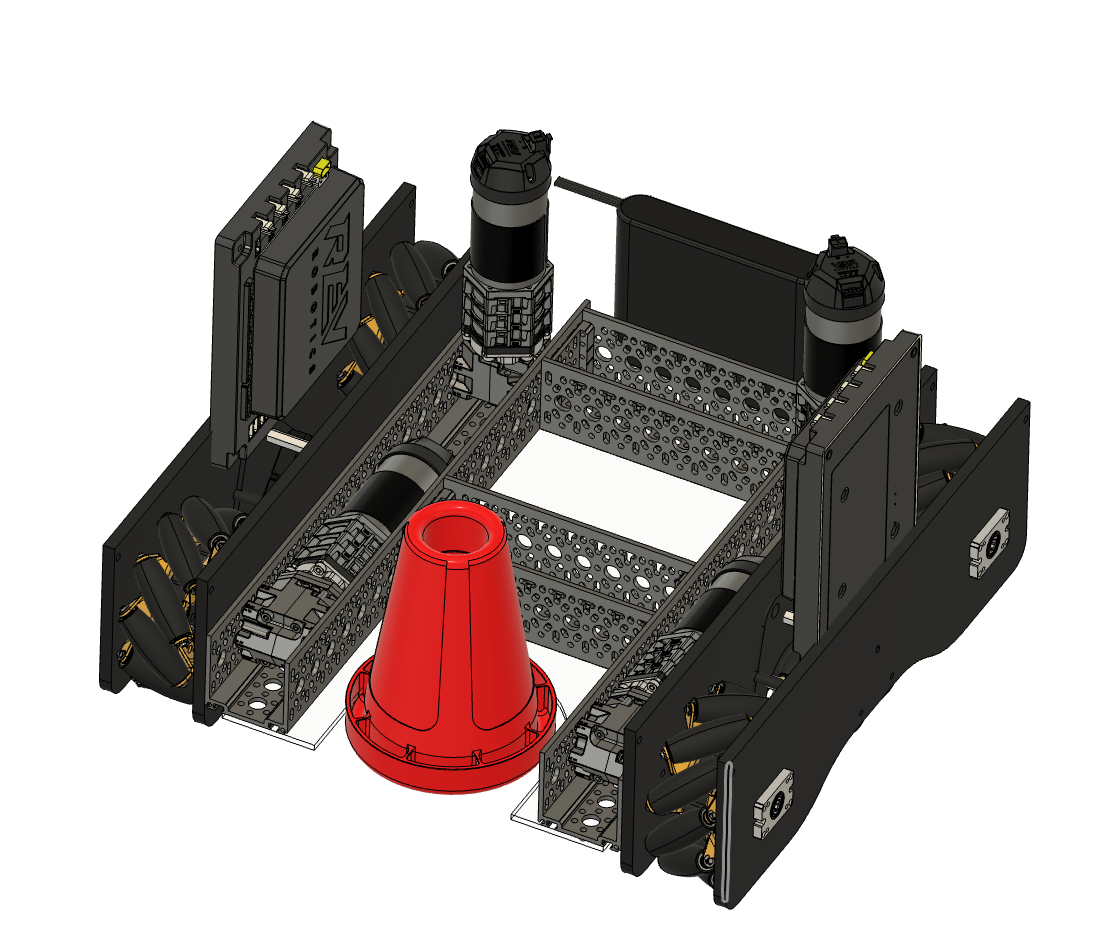
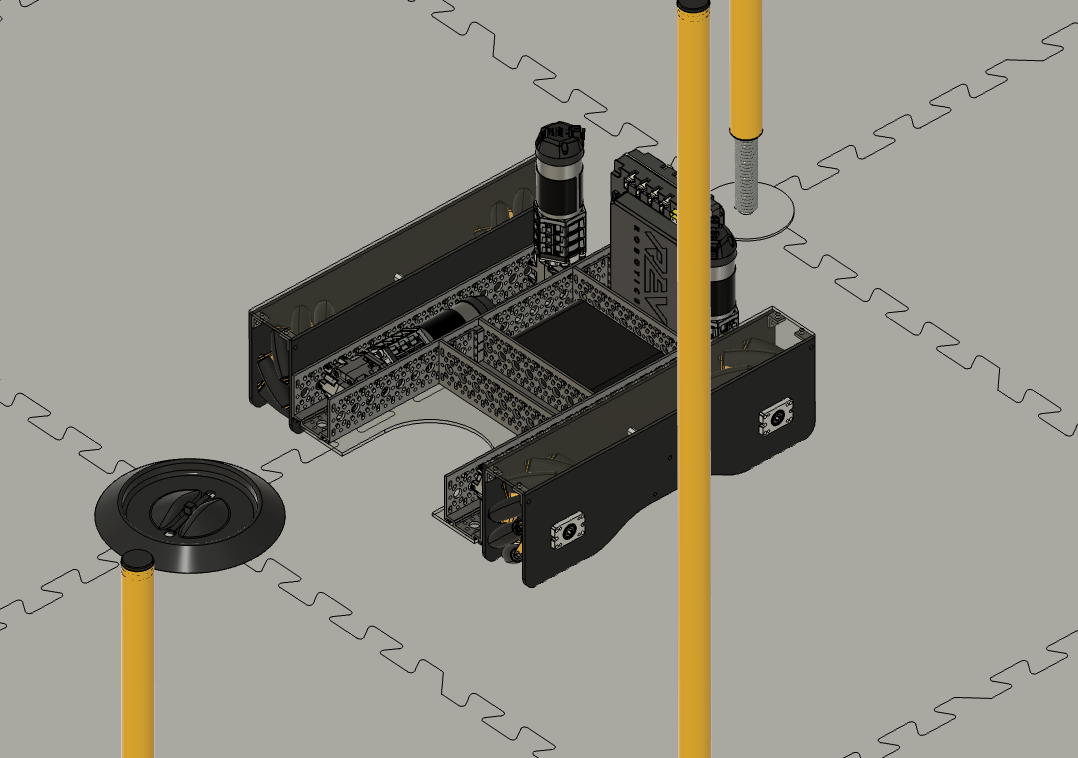
I designed the chassis in Fusion 360, aiming for a low, wide structural base that could support the extension arm’s added height without compromising stability or maneuverability. The design needed to balance rigidity, weight, and available mounting space for motors, telemetry devices, and the arm mechanism.
Manufacturing:
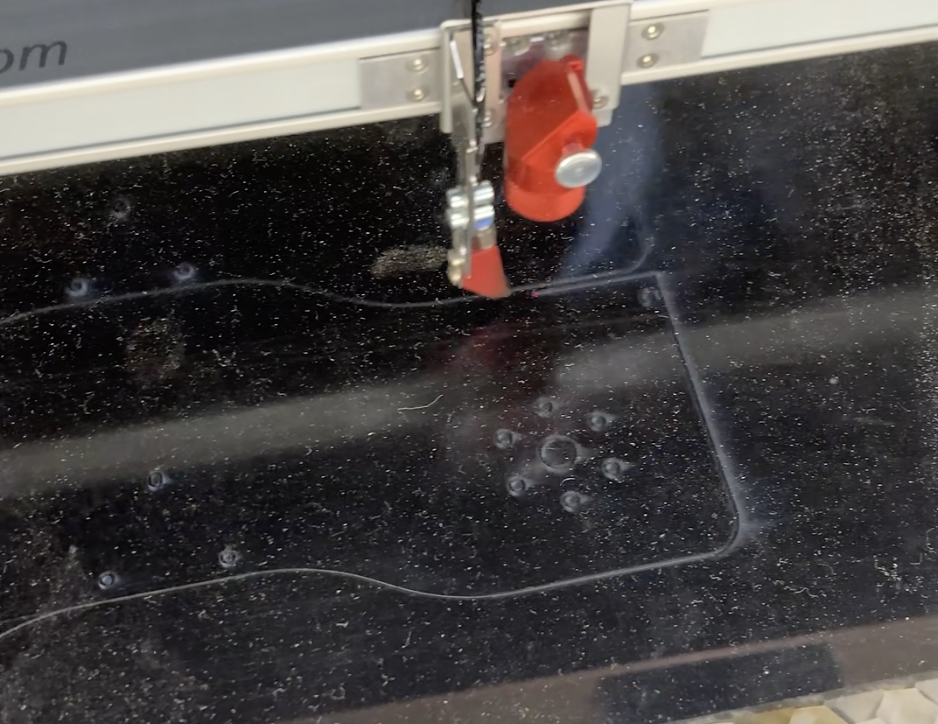
The chassis was constructed using laser-cut Delrin (acetal homopolymer) for durable structural panels, aluminum extrusion for rigidity, and select PETG 3D-printed parts to mount telemetry devices. This combination kept the chassis lightweight while meeting the strength requirements needed for competition play.
Results:
The completed chassis delivered fast omnidirectional motion while keeping the robot’s center of gravity stable, even with the tall extension arm mounted. The final footprint held within our 12.5” x 13.5” target, meeting the competition’s spatial constraints while leaving room for the lift mechanism to operate. The robot performed well, making a splash at the oregon state F.I.R.S.T. FTC competition which coming from a public school team surprised our better funded competitors.